Sexually Transmitted Infections in Colombian University Students: Prevalence and Associated Factors of Chlamydia trachomatis and Neisseria gonorrhoeae
Autores/as
-
Monica Yurley Arias Guerrero
Facultad de Ciencias Médicas y de la Salud, Instituto de Investigación Masira (Universidad de Santander, Bucaramanga /Colombia)
 https://orcid.org/0000-0002-8819-8175
- Jorge Alexander Silva-Sayag Facultad de Ciencias Médicas y de la Salud, Instituto de Investigación Masira (Universidad de Santander, Bucaramanga /Colombia)
-
Giovanna Rincón Cruz
Grupo de Inmunología y Epidemiología Molecular (GIEM), Facultad de Salud - Escuela de Microbiología (Universidad Industrial de Santander, Bucaramanga /Colombia)
https://orcid.org/0000-0003-2518-9981
- Ruth Aralí Martínez Vega Facultad de Ciencias Médicas y de la Salud, Instituto de Investigación Masira (Universidad de Santander, Bucaramanga /Colombia)
-
Liliana Benitez Díaz
Maestría en Investigación en Enfermedades Infecciosas (Universidad de Santander, Bucaramanga /Colombia)
https://orcid.org/0000-0002-9785-3688
DOI:
https://doi.org/10.70099/BJ/2025.02.02.5Palabras clave:
Chlamydia trachomatis, Neisseria gonorrhoeae, prevalence, university students, sexually transmitted infections, molecular diagnostics, asymptomatic infection, STI screening in youth, Latin America epidemiology, self-collected samplesResumen
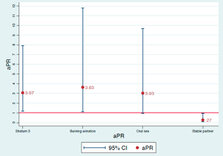
Young people comprise a high-risk population for the acquisition of sexually transmitted infections (STIs). Chlamydia trachomatis (CT) and Neisseria gonorrhoeae (NG) are the most common bacterial STIs worldwide. In Colombia, STIs are underreported because epidemiological surveillance programs lack systematic searches for asymptomatic patients. The present study determined the prevalence of CT and NG infections and related factors in students at the Universidad de Santander, Bucaramanga campus, Colombia. Methods: Newly admitted students were enrolled between 2019 and 2020. A survey was conducted, and samples of vaginal secretions and male urine were self-collected. PCR was performed to detect pathogens. Results: 190 students aged 18–25 years were included. The prevalence of CT was 7.9% (15/190), and that of NG was 1.05% (2/190). Coinfections were not observed. In women, the prevalence of CT was 8.06%, and NG was not detected; in men, the prevalence of CT and NG was 7.58% and 3.03%, respectively. Ten percent reported never using condoms or having more than one partner simultaneously. Knowledge about CT and NG was poor in 90% and 76.8% of participants. Factors associated with higher prevalence of CT or NG infection were socioeconomic status (aPR 3.07, 95%CI 1.19-7.91) and urinary burning (aPR 3.63, 95%CI 1.12-11.8), while having a steady partner was associated with lower prevalence of infection (aPR 0.27; 95%CI 0.08-0.94). Conclusions: The prevalence of CT and NG was higher than that reported in previous studies on university students in Colombia. Therefore, it is necessary to implement surveillance programs and focus on preventive strategies to avoid health problems.
Citas
1. Gaitán-Duarte H. Sexually transmitted infections: A public health problem Colombia must face. Rev Colomb Obstet Ginecol. 2017;68(3):164–7. doi: 10.18597/rcog.3080
2. Vallejo-Ortega MT, Duarte HG, Mello MB, Caffe S, Perez F. A systematic review of the prevalence of selected sexually transmitted infections in young people in Latin America. Rev Panam Salud Publica/Pan Am J Public Heal. 2022;46:1–11.doi:10.26633/RPSP.2022.73
3. Xu Y, Aboud L, Chow EPF, Mello MB, Wi T, Baggaley R, et al. The diagnostic accuracy of pooled testing from multiple individuals for the detection of Chlamydia trachomatis and Neisseria gonorrhoeae: a systematic review. Int J Infect Dis. 2022;118:183–93. doi:10.1016/j.ijid.2022.03.009
4. Instituto Nacional de Salud. Sistema de Vigilancia en Salud Pública - SIVIGILA. [Internet]. Date of access: February 25, 2023. Available from: https://www.ins.gov.co/Direcciones/Vigilancia/Paginas/SIVIGILA.aspx
5. Paredes MC, Gómez YM, Torres AM, Fernández M, Tovar MB. Prevalencia de infecciones por Chlamydia trachomatis y Neisseria gonorrhoeae en adolescentes de colegios de la provincia de Sabana Centro, Cundinamarca, Colombia. Biomedica. 2015;35(3):314–24. doi:10.7705/biomedica.v35i3.2398
6. Cuervo-Araque CM, Gaviria-Nuñez AM, Quiroga-Sierra AC, González-Niño A. Chlamydia trachomatis, herpes simplex virus-2 and Neisseria gonorrhoeae: Prevalence and risk factors in students. Rev Salud Pública. 2021;23(5):1–7. doi: 10.15446/rsap.V23n5.91054
7. Torrado-García LM, Martínez-Vega RA, Rincon-Orozco B. A Novel Strategy for Cervical Cancer Prevention Using Cervical-Vaginal Self-Collected Samples Shows High Acceptability in Women Living in Low-Income Conditions from Bucaramanga, Colombia. Int J Womens Health. 2020; 12: p. 1197-1204. doi:10.2147/IJWH.S265130
8. Priyadarshi K, Prakash P, Rani A, Singh SK. Multiplex nested polymerase chain reaction targeting multiple genes for the detection of Neisseria gonorrhoeae and Chlamydia trachomatis in genitourinary specimens. Indian J Sex Transm Dis AIDS. 2019;40(2):152-8.
9. Mahmoodi P, Motamedi H, Seyfi Abad Shapouri MR, Bahrami Shehni M, Kargar M. Molecular Detection and Typing of Human Papillomaviruses in Paraffin-Embedded Cervical Cancer and Pre-Cancer Tissue Specimens. Iran J Cancer Prev. 2016;22;9(1):e3752. doi: 10.17795/ijcp-3752.
10. Flores-Mireles AL, Walker JN, Caparon M, Hultgren SJ. Urinary tract infections: epidemiology, mechanisms of infection and treatment options. Nat Rev Microbiol. 2015;13(5):269-284. doi:10.1038/nrmicro3432 .
11. Franceschi S, Smith JS, Van Den Brule A, Herrero R, Arslan A, Anh PTH, et al. Cervical infection with Chlamydia trachomatis and Neisseria gonorrhoeae in women from ten areas in four continents: A cross-sectional study. Sex Transm Dis. 2007;34(8):563–9. doi: 10.1097/01.olq.0000258417.66619.0e.
12. Melo A, Lagos N, Montenegro S, Orellana JJ, Vásquez AM, Moreno S, et al. Virus papiloma humano y Chlamydia trachomatis según número de parejas sexuales y tiempo de actividad sexual en estudiantes universitarias en la Región de La Araucanía, Chile. Rev Chil Infectol. 2016;33(3):287–92. doi:10.4067/S0716-10182016000300006
13. McHaro RD, Kisinda A, Njovu L, McHaro M, Mbwilo F, Mihale G, et al. Prevalence of and risk factors associated with HIV, Herpes Simplex Virus-type 2, Chlamydia trachomatis and Neisseria gonorrhoeae infections among 18–24 year old students attending Higher Learning Institutions in Mbeya-Tanzania. PLoS One. 2022;17:1–15. doi:10.1371/journal.pone.0266596
14. Shephard M, Matthews S, Kularatne R, Andrewartha K, Blondeel K, Alvarez C, et al. Independent clinic-based evaluation of point-of-care testing for the screening of Chlamydia trachomatis, Neisseria gonorrhoea and Trichomonas vaginalis in women-at-risk in Australia, Guatemala, Morocco, and South Africa. BMC Infectious Diseases. 2024;24(1):277. doi.org/10.1186/s12879-024-09018-4.
15. Gabster A, Mayaud P, Ortiz A, Castillo J, Castillero O, Martínez A, et al. Prevalence and determinants of genital Chlamydia trachomatis among school-going, sexually experienced adolescents in urban and rural Indigenous regions of Panama. Sex Transm Infect. 2021;97(4):304-11. doi. 10.1136/sextrans-2019-054395
16. Klavs I, Milavec M, Berlot L, Kustec T, Grgič-Vitek M, Lavtar D, et al. Prevalence of sexually transmitted infections with Chlamydia trachomatis, Neisseria gonorrhoeae, Mycoplasma genitalium and Trichomonas vaginalis: findings from the National Survey of Sexual Lifestyles, Attitudes and Health, Slovenia, 2016 to 2017. Euro Surveill. 2022;27(14):2100284. doi. 10.2807/1560-7917.ES.2022.27.14.2100284
17. Campaner AB, de Castro MA, Lucarelli AP. Chlamydia trachomatis prevalence in females in São Paulo, Brazil: 11 years' surveillance of the infection. Braz J Microbiol. 2022;54(1):151-8. doi.org/10.1007/s42770-022-00865-4
Descargas
Publicado
Cómo citar
Número
Sección
Categorías
Licencia

Esta obra está bajo una licencia internacional Creative Commons Atribución 4.0.
Authors who publish with BioNatura Journal agree to the following terms: Authors retain copyright and grant the BioNatura Institutional Publishing Consortium (BIPC) right of first publication with the work simultaneously licensed under a Creative Commons Attribution 4.0 International License (CC BY 4.0). This allows others to share the work with an acknowledgment of the work's authorship and initial publication in this journal.This is an open access article distributed under the terms of the Creative Commons Attribution 4.0 International License (CC BY 4.0), which permits unrestricted use, distribution, and reproduction in any medium, provided the original work is properly cited.


