Rosmarinus Officinalis: Phytochemical analysis and biological activities
Autores/as
-
Dalila Bencheikh
Department of Biochemistry and Microbiology, Faculty of Sciences, University of M'sila, PO Box166 Ichebilia,28000 Msila, Algeria. 2 Laboratory of phytotherapy applied to chronic diseases. Department of Animal Biology and Physiology
 https://orcid.org/0000-0003-0992-2987
DOI:
https://doi.org/10.70099/BJ/2024.01.01.28Palabras clave:
Antibacterial activity, Antioxidant activity, Aqueous extract, bioactive compounds, Rosmarinus officinalisResumen
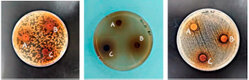
Rosemary (Rosmarinus officinalis), a very abundant species in Algeria, is a medicinal plant belonging to the Lamiaceae family, used for its various therapeutic effects. The present study was conducted to determine the bioactive compounds and biological activities (antioxidant and antibacterial activities) of the aqueous extract of the plant (EQRO). The sensitivity of the tested bacterial strains varies according to dilutions and bacterial nature (Staphylococcus aureus, Pseudomonas aeruginosa and Escherichia coli), which was determined using the agar diffusion method. Meanwhile, the in vitro antioxidant activity was assessed using DPPH radical scavenging. EQRO showed high levels of polyphenols and flavonoid contents (455.10 µg EAG/mg extract; 7.33 µg EAQ / mg extract, respectively) with a yield of 14.47%. In addition, the plant extract revealed a significant antioxidant activity as evidenced by the DPPH (IC50=0.128 mg/ml), which is close to that obtained by BHT. Results showed a remarked antimicrobial effect against gram-positive bacteria (Staphylococcus aureus). At the same time, there was no significant effect on gram-negative bacteria (Pseudomonas aeruginosa and Escherichia coli), which explains the difference in susceptibility of the tested bacterial strains. Rosmarinus officinalis is suggested as an effective therapeutic medicinal plant because of its antioxidant and antibacterial properties.
Citas
1. Lian, L.J.; Xu, J.;Wu, C.; Wang,X.F.; Fu, W.Y.; Xu, L.H. Lead induces oxidative stress, DNA damage and alteration of p53, Bax and Bcl-2 expressions in mice. Food Chem Toxicol. 2008, 46(5),pp.1488-94.
2. Migdal, C.;Serres, M. Espèces réactives de l’oxygène et stress oxydant. Med Sci. 2011,27(4),pp. 405-412.DOI. https://doi.org/10.1051/medsci/2011274017
3.Vanden, B.D.A; Vlietnick ,A. J.; Hostettmann, K. Screening methods for antibacterial agents from higher plants. Methods in plant Biochemistry. Assay for Bioactivity. Academic Press, London. 1991,6,pp.47–69.
4.Biyiti, L. ; Meko'o, D.; Tamzc, V. ;Amvam ,Z. Recherche de l'activité antibactérienne de quatre plantes médicinales camerounaises. Pharm Med Trad Afr. 2004,13pp. 11-20.
5.Pehlivan, M.; Mohammed, F.S.; Şabik, A.E.; Kına, E.; Dogan, M.; Yumrutaş, Ö; Sevindik, M. Some Biological activities of ethanol extract of Marrubium globosum. Turk. J.Agri-Food Sci and Tech.2021, 9(6)pp. 1129-1132. DOI: 10.24925/turjaf.v9i6.1129-1132.4382
6. Lias, F.; Kholkhal, W. Gaouar Nassira. Bekhechi Chahrazed. Bekkara Fawzia Atik. Antibacterial and antifungal Activities of olive (Olea europaea L.)from Algeria.J. Microbiol. Biotech. Res.2011. 1 (2)pp. 69-73.
7.Jamshidi-Kia, F.; Lorigooini. Z.; Amini-Khoei, H. Medicinal plants: Past history and future perspective. Journal of herbmed pharmacology. 2018,7pp.1-7
8.Pehlivan, M.; Mohammed, F.S.; Şabik, A.E.; Kına, E.; Dogan, M.; Yumrutaş, Ö.;Sevindik, M. Some Biological activities of ethanol extract of Marrubium globosum. Tur. J. Agri-Food Sci Tech. 2021, 9(6)pp. 1129-1132. DOI: 10.24925/turjaf.v9i6.1129-1132.4382
9.Begum, A.; Sandhya, S.; Syed S.A.A.; David, B. An in-depth review on the medicinal flora Rosmarinus officinalis (Lamiaceae). Acta Scientiarum Polonorum, Tech Alim. 2013,12(1)pp.61-74.
10.Mouas, Y.; Djemal, H.; Megdad,F.; Benrebiha, F.Z. Etude de l’influence de trois écotypes différents (Blida, Djelfa et Msila) sur la variation des paramètres physiologiques et biochimiques du romarin Rosmarinus officinalis L. Revue Agrobio. 2016,6 (1)pp. 96-100.
11.Reguieg, L. Using medicinal plants in Algeria. Amer J food nut .2016,1(3)pp.126-127.
12.Ibanez, E.; Kubatova, A.; Senorans, F.J ; Cavero, S.; Reglero, Guillermo, B.; Hawthorne, S. Subcritical Water Extraction of Antioxidant Compounds from Rosemary Plants.J. Agric. Food Chem. 2003,51(2)pp.375–38. DOI: 10.1021/jf025878j
13.Peng, Y. ; Yuan, J.; Liu, F.; Ye, J. Determination of active components in rosemary by capillaryelectrophoresis with electrochemical detection. J Pharm Biom Anal. 2005,pp.39: 431.
14.Chevallier, A. Encyclopédie des plantes médicinales. Larousse. 2001,p. 61, 293.ISBN. 2035602521, 9782035602527
15.Slinkard, K.; Singleton, V.L. Total phenol analysis: automation and comparison with manual methods. American Journal of Enology and Viticulture.1977,pp.28:49–55. DOI: 10.5344/ajev.1977.28.1.49
16. Sakanaka, S.; Kim, M.;; Taniguchi, M.;, Yamamoto, T.. Antibacterial substances in Japanese extract against Streptococcus mutans, a cariogenic bacterium. Agr. Biol. Chem. 1989..53,pp. 2307-2311 https://doi.org/10.1271/bbb1961.53.2307
17.Bate-Smith, E. Haemanalysis of tannins, the concept of relative astringency. Phytochemistry.1973. 12,pp. 907-912.
18.Kaviarasan, S.; Naik, G.H.; Gangabhagirathi, R.; Anuradha, C.V.; Priyadarsini, K.I. In vitro studies on antiradical and antioxidant activities of fenugreek (Trigonella Foenum graecum) seeds. Food Chem.2007.103,pp. 31-37. DOI: 10.1016/j.foodchem.2006.05.064
19.Gülüce, M.; Sokmen, M.; Daferera, D.; Agar, G.; Ozkan, H.; Kartal, N.; Polissiou, M.; Sokmen, A.; Gupta, V.; Mittal, P.; Bansal, P.; Khokra, S.L.; Kaushik, D. Pharmacological potential of Matricaria recutita-A review. Inter J pharm sci drug res. 2010.2,pp. 12-6.
20.Rahal, J.J. Novel antibiotic combinations against infections with almost completely resistant Pseudomonas aeruginosa and Acinetobacter species. Clin infec dis.2006. 43(2),pp.95-99.
21.Ponce, G.; Fritz, R. ; Del Valle, E. ; Roura, I. Antimicrobial activity of essential oils on the native microflora of organic Swiss chard. Lebensmittel-Wissenschaft und – Technologie. 2003.36,pp. 679–684.
22. Markowicz Bastos, D. H.; Saldanha, L. A.; Catharino, R. R.; Sawaya, A.C.H. F.; Cunha, I B. S.; Carvalho, P. O.; Eberlin, M. N. Phenolic Antioxidants Identified by ESI-MS from Yerba Maté (Ilex paraguariensis) and Green Tea (Camelia sinensis) Extracts. Molecules. 2007.12,pp. 423-432. DOI:10.3390/12030423
24.Albano SM, Miguel MG. 2011. Biological activities of extracts of plants grown in Portugal. Industrial Crops and Products 33:338-343.
25.Seidel V.2005. Initial and Bulk Extraction. In: Sarker , S and Gray, A . Natural products isolation. Ed, Totowa , Humana Press pp 27-37 ISBN 978-1-5-8829-447-0
26.Tsai PJ, Tsai TH, Ho SC. 2007. In vitro inhibitory effects of rosemary extracts on growth and glucosyltransferase activity of Streptococcus sobrinus, Food Chemistry 105: 311– 316. DOI:10.1016/j.foodchem.2006.11.051
27.Shama IY A, Abdullah AYA, Adam KMO, Aldai MAB, Omer AMAR, Abdelgadir WS. 2014. In vitro Antimicrobial activity of Rosmarinus officinalis leave extracts. Journal of Agri-Food and Applied Sciences2(1):15-21.
28.Dorman HJD, Hiltunen R, Tikkanen MJ. 2003. Characterisation of the antioxidant properties of de-odourised aqueous extracts from selected Lamiaceae herbs .Food Chemistry 83: 255–262.
29.Zhao H, Dong J, Lu J, Chen J, Li Y, Shan L, Lin Y, Fan W Gu.2006. Effects of extraction solvent mixtures on antioxidant activity evaluation and their Références bibliographiques extraction capacity and Selectivity for free phenolic compounds in barley Hordeum vulgare L. J. Agric. Food Chemistry 54: 7277−7286.
30. Wojdylo, A., Oszmianski, J., Czemerys, R. (2007) Antioxidant activity and phenolic compounds in 32 selected herbs. Food Chem. 105: 940-949.
31.Mohsen Sobhy M, Ammar Abdella SM.2009. Total phenolic contents and antioxidant activity of corn tassel extracts. Food Chemistry 112(3): 595-598.
32.Yesil-Celiktas O, Girgin G, Orhan H, Wichers HJ, Bedir E, VardarSukan F. 2007. Screening of free radical scavenging capacity and antioxydant activities of Rosmarinus Officinalis extract with Focus on location and harvesting times. European food research and technology 224: 443-51.
33.Erkan N, Ayranci G, Ayranci E.2008. Antioxidant activities of rosemary (Rosmarinus Officinalis L.) extract, blackseed (Nigella sativa L.) essential oil, carnosic acid, rosmarinic acid and sesamol. Food Chem 110: 76-8.
34. Ho, S.C., Tsai, T.H., Tsai, P.J., Lin, C.C. (2008) Protective capacities of certain spices against peroxynitrite-mediated biomolecular damage. Food and Chemical Toxicology. 46: 920-928.
35.Su, X. ; Duan, J. ; Jian, Y. ; Shi, J. ; Kakuda, Y. Effect of soaking conditions on the antioxidant potentials of Oolong tea’s food composition Anal.2006. 19,pp. 348- 353.
36.Tawaha, K., Alali, F.Q.; Gharaibeh, M.; Mohammad, M.; El-Elimat, T. Antioxidant activity and total phenolic content of selected Jordanian plant species. Food Chem.2007. 104(4),pp.1372-1378. DOI:10.1016/j.foodchem.2007.01.064
37.Kosar, M.; Dorman, H.J.D. ; Hiltunen, R. Effect of an acid treatment on the phytochemical and antioxidant characteristics of extracts from selected Lamiaceae species. Food Chem.2005. 91,pp.525–533.
38.Aljabri, M. Composition and antioxidant activities of rosemary (Rosmarinus officinalis) extract. Eurasian Journal of Biosciences.2020. 14,pp. 2179-2185.
39.Maisuthisakul, P.; Pasuk, S.; Ritthiruangdej, P. Relationship between antioxidant properties and chemical composition of some Thai plants. J Food Composition and Analysis.2008. 21,pp. 229-240.
40.Bouabida, N.; Benoufella –Kitous, K.; Ait Amar, S.; Medjdoub- Bensaad, F.; Graiche, F. Evaluation of biocidal activity of four Lamiaceae leaves on the black bean aphid Aphis fabae Scopoli, (Homoptera: Aphididae).Acta agriculture Slovenica.2022.118,pp.1-2212
41.Perez, M.B.; Calderon, N.L.; Croci, C.A. Radiation-induced enhancement of antioxidant activity in extracts of rosemary (Rosmarinus officinalis L.).Food Chem.2007. 104,pp. 585-592.
42.Fellah, H.; Ksouri, R.; Chaieb, K.; Karray, N.; Trabelsi, N.; Boulaaba, M.; Abdelly, C. Phenolic composition of Cyinara Cardunculus L. Organs, and their biological activities. Compte rendu biologie. 2008.331,pp. 372-379.
43.Talbi, H.; Boumaza, A.; El-mostafa, K.; Hilali, A. Evaluation de l’activité antioxydant et la composition physico-chimique des extraits méthanoliques et aqueux de la Nigella sativa L. Sci.2015.6(4) ,pp.1111-1117.
44.Tepe, B.; Sokmen, M.; Akpulat, H.A.; Sokmen, A. Screening of the antioxidant potentials of six Salvia species from Turkey. Food Chem.2006. 95,pp. 200-204.
45.Kivilompolo, M.; Hyotylainen, T. Comprehensive two-dimensional liquid chromatography in analysis of Lamiaceae herbs: Characterisation and quantification of antioxidant phenolic acids. J Chromatography A. 2007.1145,pp. 155-164. DOI: 10.1016/j.chroma.2007.01.090
46. Fadili, K.; Amalich, S.; N’dedianhaoua, S.K.; Bouachrine ,M.; Mahdjoubi, M.;EL HILALI, F.; Zair, T.2015. Polyphenols content and antioxidant activity of two species from Moroccan High. Inter J Innov Sci Res.2015. 17 ( 1),pp .24-33
47.Makhloufi, A. Antibacterial Activity of the Extracts Obtained from Rosmarinus officinalis, growin in wild in Bechar region, south west of Algeria. Appl Biol Sah Areas.2017. 1( 2),pp.30-36.
48.Damak, N.; Bouaziz, M.; Ayadi, M.; Sayadi, S.; Damak, M. Effect of the Maturation Processon the Phenolic Fractions.Fatty Acides,and Antiioxidant Activity of the Chétoui Olive Fruit Cultivar.Agric.Food Chem.2008. 56,pp.1560-1566. DOI: 10.1021/jf072273k
49.Turkmen, N.; Velioglu, Y.S.; Sari, F. ; Polat, G. Effect of Extraction Conditions on Measured Total Polyphenol Contents and Antioxidant and Antibacterial Activities of Black Tea. Molec.2007. 12,pp.484-496. DOI: 10.3390/12030484
50.Slamenova, D.; Kuboskova, K.; Horvathova, E.;Robichova, S. Rosemary-stimulated reduction of DNA strand breaks and FPGsensitive sites in mammalian cells treated with H2O2 or visible light-excited Methylene Blue.Cancer Letters.2002. 177,pp. 145-153. DOI: 10.1016/S0304-3835(01)00784-4
51.Wei, G.J.; Ho, C.T. A stable quinone identified in the reaction of carnosol, a major antioxidant in rosemary, with 2, 2-diphenyl-1-picrylhydrazyl radical. Food Chem.2006. 96,pp. 471- 476. DOI: 10.1016/j.foodchem.2005.02.041
52.Visanji, J.M.; Thompson, D.G.; Padfield, P.J. 2006. Induction of G2/M phase cell cycle arrest by carnosol and carnosic acid is associated with alteration of cyclin A and cyclin B1 levels. Cancer Letters.2006.237,pp. 130-136. DOI: 10.1016/j.canlet.2005.05.045
53.Zhang, L.; Abbott, J.J.; Dong, L.; Kratochvil, B.E.; Bell, D.; Nelson, B. J. Artificial bacterial flagella: Fabrication and magnetic control. Appl Phys Letters.2009. 94(6),pp. 064-107.
54.Balouiri,M.; Sadiki, M.; Ibnsouda, S.K. Methods for in vitro evaluating antimicrobial activity. Journal of Pharmaceutical Analysis.2016. 6(2).pp , 71-79.
55.Kil, H.Y.; Seong, E.S.; Ghimire, B.K.; Chung, I.M.; Kwon, S.S.; Goh, E.J.; Heo, K.;Kim, M. J.; Lim, J.D.; Lee, D.; Yu,C.Y. Antioxidant and antimicrobial activities of crude sorghum extract.Food Chem.2009. 115(4),pp. 1234-1239.
56.Shan, B.; Cai, Y.Z.; Brooks, J.D.; Corke, H. The in vitro antibacterial activity of dietary spice and medicinal herb extracts. Inter J Food Micr.2007.117,pp.112-119.DOI:10.1016/j.ijfoodmicro.2007.03.003
57.Askun, T.; Tumen, G.; Satil, F. Ates M. In vitro activity of methanol extracts of plants used as spices against Mycobacterium tuberculosis and other bacteria. Food Chem. 2009.116,pp. 289-294. DOI: 10.1016/j.foodchem.2009.02.048
Descargas
Publicado
Cómo citar
Número
Sección
Categorías
Licencia

Esta obra está bajo una licencia internacional Creative Commons Atribución 4.0.
Authors who publish with BioNatura Journal agree to the following terms: Authors retain copyright and grant the BioNatura Institutional Publishing Consortium (BIPC) right of first publication with the work simultaneously licensed under a Creative Commons Attribution 4.0 International License (CC BY 4.0). This allows others to share the work with an acknowledgment of the work's authorship and initial publication in this journal.This is an open access article distributed under the terms of the Creative Commons Attribution 4.0 International License (CC BY 4.0), which permits unrestricted use, distribution, and reproduction in any medium, provided the original work is properly cited.


