In vitro propagation of the banana cultivar 'INIVITPB-2012' in Temporary Immersion System
Authors
-
Milagros Basail Pérez
Instituto de Investigaciones de Viandas Tropicales (INIVIT) / Santo Domingo, Villa Clara / Cuba
 https://orcid.org/0000-0003-0486-8600
DOI:
https://doi.org/10.70099/BJ/2024.01.04.14Keywords:
multiplication coefficient, cultivar, frequency the inmersión, volume of culture mediumAbstract
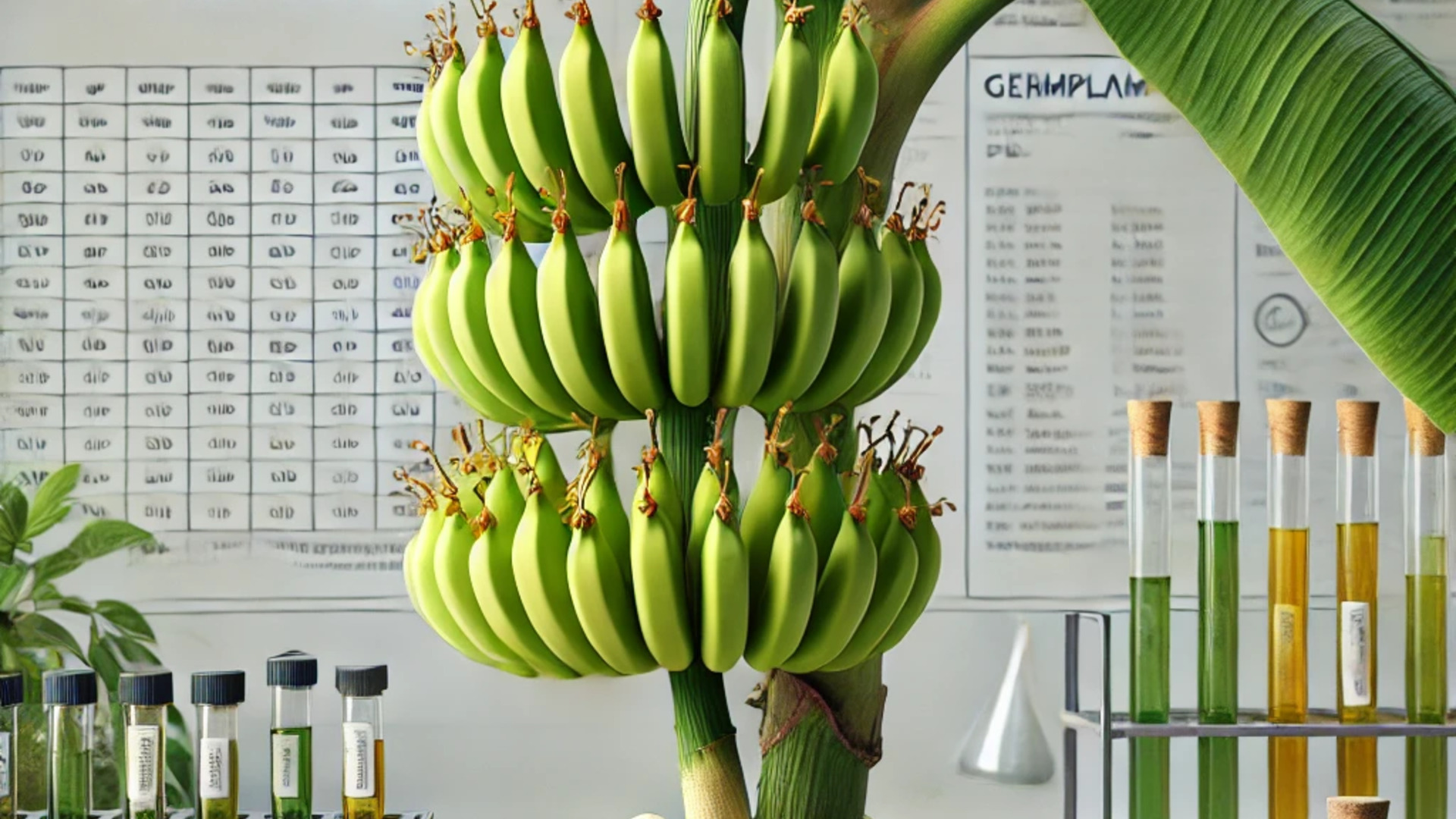
Temporary immersion systems (SIT) have been used for the in vitro multiplication of different cultivars, allowing high multiplication coefficients to be obtained. The present work was carried out with the objective of determining the cultivation conditions in the cultivar to be propagated that allow for the increase of the multiplication coefficient. With high yield potential, the donkey banana cultivar 'INIVITPB-2012' was selected from the Germplasm Bank of the Tropical Viands Research Institute (INIVIT). Independent and consecutive experiments were carried out where the effect of immersion time, immersion frequency, and the volume of culture medium that would enable an increase in the number of explants to be obtained were determined. As a result, it was determined that with an immersion time of ten minutes, immersion frequency every 3 hours, and 30 ml of culture medium per explant after 18 days of culture, the best results were obtained in the variables evaluated.
References
1. FAO Statistics Division. http://faostat.fao.org/site/526/default.aspx. FAO (Food and Agriculture Organization of the United Nations), 2020. Plátanos y Bananos. http://www.fao.org/tempref/GI/Reserved/FTP_ FaoRlc/old/prior/segalim/prodalim/prodveg/cdrom/contenido/libro11/cap3.htm
2. Cañal M. Fisiología del cultivo in vitro. En: Biotecnología Vegetal: Libro de reportes cortos del 5to Coloquio Internacional de Biotecnología vegetal, IBP, Santa Clara, Cuba, 1999; pp. 14-22.
3. Kitto S. Commercial Micropropagation HorScience, 1997; 32(6): 1-3.
4. Simonton W, Robacker C. Programmable micropropagation apparatus using cycled liquid médium, Plant Cell, Tissue and Organ Culture, 1991; pp. 211-218.
5. Aitken-Christie J, Davies H, Kubota C, Kosai T. Automation in Plant Tissue Culture. General introduction overview: Automation and environment control in Plant Tissue Culture Kluwer, Academic Publisher, Dordrech, 1995; pp.1-19.
6. Georgiev V, Schumann A, Pavlov A, Bley T. Temporary immersion systems in plant biotechnology. Engineering in Life Sciences, 2014; 14(6): 607–621.
7. Alvard D, Cote F, Teisson C. Comparison of methods of liquids medium culture for banana micropropagation. Effects of temporary inmersion of explants. Plant Cell Tissue and Organ Culture, 1993; 32(2):55-60. https://doi.org/10.1007/BF00040116.
8. Escalona M, González B, Lorenzo J, Daquinta M, Espinosa P, Fundora Z, Espinosa D, Borroto C, Propagación in vitro de la piña en Sistemas de Inmersión Temporal. BioVeg ’97. Técnicas de avanzada aplicadas a la propagación masiva de plantas. Ciego de Ávila, Cuba. Libro de resúmenes, 1997; 157 p.
9. Lorenzo J, González B, Escalona M, Teisson C, Espinosa P, Borroto C. Sugarcane shoot in an improved Temporary ImmersionS. Plant Cell Tissue and Organ Culture, 1998; 54(3): 197-200.
10. Ventura J, Medero V, López J, García M, Rodríguez S, García J, Reynaldo D. Manejo de los explantes en Inmersión Temporal, clon de Plátano ´FHIA-18´. III Encuentro Latinoamericano de Biotecnología Vegetal. Palacios de convenciones de La Habana. FAO. Cuba, 1998; 64 p.
11. Jiménez E, Pérez N, De Feria M, Barbón R, Capote A, Chávez M, Quiala E, Pérez C. Improved production of patato microtubersusing a Temporary Inmersión System. Plant Cell, Tissue and Organ Culture, 1999; 59, pp. 19-23.
12. Castro D, Díaz JN. Clonal propagation of bananas by biorreactors of temporary immersion. In: Acorbat. Memorias XV Reunión: Realizada en Cartagena de Indias, 2001; Colombia.
13. Teisson C, Alvard D. A new concept of plant in vitro cultivation liquid medium: Temporary Inmersion. En: Proceedings of the 8th International Congress on Plant Tissue and Cell Culture, Florence, Italy, 12-17 June, 1994; pp. 105-110.
14. Escalona M, Cid M, Lezcano Y, Capote I, Yánez E, González J. Propagación de la piña (Ananas comosus (L.) Merr.) en biorreactores de Inmersión Temporal. Efecto de la frecuencia de inmersión y el paclobutrazol. BioVeg’99. Ciego de Avila, Cuba. Libro de resúmenes, 1998; 28 p.
15. Vervit M. SETIS™ Bioreactor Temporary Immersion Systems in plant micropropagation. http://www.setis-systems.be, 2018; Cited 10 de Feb 2018.
16. Wu H, Kuo M, Chen C. Promotion of vegetative growth in force-ventilated Protea cynaroides L. explants cultured in modified Temporary Immersion culture vessels. HortScience, 2018; 53(1): 231–235. https://doi.org/10.21273/HORTSCI12513-17.
17. Aragón C, Sánchez C, González J, Escalona M, Carvalho L, Amâncio S. Comparison of plantain plantlets propagated in Temporary Immersion bioreactors y gelled medium during in vitro growth y acclimatization. Biol Plant, 2014; 58(1): 29–38.
18. Teisson C, Alvard D, Berthouly B, Cote F, Escalant J, Etienne H, Lartaud M. Simple apparatus to perform Plant Tissue Culture by temporary immersion. Acta Horticulturae, 1996; 440, pp. 521-526.
19. Vilchez J, Albany N. Multiplicación in vitro de Psidium guajava L. en Sistema de Inmersión Temporal. Revista Colombiana de Biotecnología Vegetal, 2014; 16(2): 96-103.
20. Albany N, Vilchez J, León S, Molina M, Nava A, Martínez L, Molina M. Medios de cultivo líquidos: un avance para la micropropagación comercial de Zábila (Aloe barbadensis Mill.). Revista Colombiana de Biotecnología, 2015; 17(2): 24-31.
21. Sigma. Catalogue.Sigma Chemical Company, EUA, 1991.
22. Murashige T, Skoog F. A revised medium for rapid growth and bioassays with tobacco Tissue Cultures. Physiologia Plantarum, 1962; pp. 473-497.
23. López J, Ventura J, Santos A. Genetic Improvement of Musa spp. by in vitro mutational plant breeding. Report of the Second Research Co-ordination Meeting of FAO/IAEA/BADC Coordinate Research Project, held in Kuala Lumpur, IAEA, Vienna, Austria, 2008; pp. 63-64.
24. Escalona M. Tesis para optar por el grado científico de Doctor en Ciencias Agrícolas, Universidad de Ciego de Ávila, Centro de Bioplantas de Ciego de Ávila, 1999; 94 p.
25. Novak F, Afza R, Duren M, Perea-Dallos M, Comger B, Tang X. Somatic embryogenesis and plant regeneration in suspensions cultures of dessert (AA and AAA) and cooking (ABB) bananas (Musa spp.). Biotechnology, 1997; 7(2): 154-159.
26. Villegas-Ramírez J, Palma-Zúñiga T. Caracterización morfogénica de la Vainilla (Vanilla planifolia, Andrews) para su propagación. Revista Agronomía Costarricense, 2022; 46(1): 9-24.
27. Pérez J, Fonseca M, Bahi M, Silva J, Werbrouck S. Multiplicación in vitro de Morus alba L. variedad criolla en Sistemas de Inmersión Temporal. Revista SciELO Analytics, 2020; 43(3): 235-243.
28. Ramirez M, Iglesias L. Evaluation of different Temporary Immersion System (BIT, BIG and RITA®) in the micropropagation of Vanilla planifolia Jacks. In vitro Cellular & Developmental Biology-Plant, 2016; 52(1): 154-160. https://doi.org/10.1007/s11627-015-9735-4.
29. Basail M, Mederos V, Otero E, Torres M, López J, Cabrera M, Santos A, Rayas A, Bauta M. Beovides Y. Nueva alternativa para la micropropagación en Inmersión Temporal del cultivar de plátano vianda ´INIVITPV-2011´ (AAB). Revista Colombiana de Biotecnología Vegetal, 2013; 15(1): 98-107.
30. Ahmadian M, Babaei A, Shokri S, Hessami S. Micropropagation of carnation (Dianthus caryophyllus L.) in liquid medium by Temporary Immersion bioreactor in comparison with solid culture. Journal of Genetic Engineering and Biotechnology, 2017; 15(2): 309-315: https://doi.org/10.1016/j.jgeb.2017.07.005.
31. Uma S, Karthic R, Kalpana S, Suthanthiram B, Saraswathi M. A novel Temporary Immersion bioreactor system for large scale multiplication of banana (Rasthali AAB—Silk). Scientific Reports, 2021; https://doi.org/10.1038/s41598-021-99923-4.
32. Rico S, Garrido J, Sánchez C, Ferreiro C, Codesido V, Vidal V. A Temporary Inmersion System to improve Cannabis sativa microprogation. Front. Plant Sci. 13, pp. 895-971. https://doi.org/10.3389/fpls.2022.895971.
33. Rosales C, Brenes J, Salas K, Arce S, Abdelnour A. Micropropagation of Stevia rebaudiana in Temporary Immersion Systems as an alternative horticultural production method. Revista Chapingo Ser.Hortic, 2018; 24(1): 69-84. https://doi.org/10.5154/r.rchsh.2017.08.028.
34. Morales J, Jadan M, Romero P. Micropropagación de Anturio (Anthurium andreanum L.) en un Sistema de Inmersión Temporal mediante organogénesis indirecta a partir de secciones de hoja. Carrera de Ingeniería en Biotecnología. Universidad de las Fuerzas Armadas ESPE. Sede Sangolquí, 2018; https://repositorio.espe.edu.ec/bitstream/21000/7704/1/AC-B-ESPE-047633.pdf.
35. Contreras F, Chávez L, Morales J, Pérez E. Micropropagación del alcaparro en medio semisólido y en biorreactores de Inmersión Temporal. Revista Méxicana de Ciencias Agrícolas, 2022; 12(1): 12-25.
36. Albany N. Propagación in vitro de Zábila (Aloe barbadensis Mill.) utilizando retardantes del crecimiento en Sistemas de Inmersión Temporal. Tesis para aspirar al Grado Científico de Doctor en Ciencias Agrícolas, 2015; pp. 1-167.
37. Roels S, Noceda C, Escalona M, Sandoval J, Canal M, Rodríguez R, Debergh P. The effect of headspace renewal in a Temporary Immersion bioreactor on plantain (Musa AAB) shoot proliferation and quality. Plant Cell Tissue Organ Cult, 2016; 84(2): 155–163.
38. Wilken D, González E, Gerth A, Gómez R, Schumann A, Claus D. Effect of Immersion Systems, lighting, and TIS designs on biomass increase in micropropagating banana (Musa spp. cv. ‘Grande naine’ (AAA). In vitro Cell Dev Biol-Plant, 2014; 50, pp. 582–589.
39. Bello J, Cruz C, Pérez J. A new Temporary Immersion System for commercial micropropagation of banana (Musa AAA cv. Grand Naine). In vitro Cellular & Developmental Biology - Plant. Springer, 2019; 55(3): 313–320.
40. Martínez E, Isla B, Pérez J, Bello J. Temporary Immersion improves in vitro multiplication and acclimatization of Anthurium andreanum Lind. Scientia Horticulturae, 2019; 249, pp. 185-191. https://doi.org/10.1016/j.scienta.2019.01.053.
41. Villegas-Ramírez J, Palma-Zúñiga T. Multiplicación in vitro de Zingiber officinale Roscoe cv. ‘Gran Caimán’ en Sistema de Inmersión Temporal. Revista Biotecnología Vegetal, 2019; 19(4): 12-22.
42. Rodríguez B, Morales D. Efecto de la densidad de explantes y el volumen de medio de cultivo sobre la multiplicación in vitro de arándano (Vaccinium corymbosum L.) variedades Brigitta y Legacy. Revista Colombiana de Biotecnología, 2015; 13(1): 94-102.
43. Doina M, Borsal O, Pamfil D. Micropropagation of Vaccinium Corymbosum l. and corylus avellana l. Using a Temporary Immersion bioreactor system clapa. Revista Agriculture, 2019; 3(4): 111-112.
44. Alamilla J, Caamal J, Criollo M, Vera J, Reyes J. Biofábricas y biorreactores de Inmersión Temporal: Propagación in vitro de Anthurium andreanum L. y su viabilidad económica. Revista Agroproductividad, 2019; 12(10): 23-29.
45. Minchala N, Hoyos R, Correa G. Micropropagation of Iraca (Carludovica palmata Ruiz y Pav) using a Temporary Immersion System. Revista Research Square, 2021; pp. 1-18 https://doi.org/10.21203/rs.3.rs-2156412/v1.
46. Ortiz O, Sánchez L, Mattey A. BIT® Bioreactor increases in vitro multiplication of quality shoots in sugarcane (Saccharum spp. variety LAICA 04-809). Plant Cell Tiss Organ Cult, 2022; https://doi.org/10.1007/s11240-022-02392-4.
47. Santos A, Reynaldo D, Basail M, Medero V. Multiplicación in vitro de yemas de brotes axilares del clon de malanga Viequera (Xanthosoma spp.) en sistemas de cultivo semiautomatizado. Memorias del VIII Congreso Internacional de Biotecnología Vegetal. BioVeg, 2011; ISBN: 978-959-16-1286-1.
48. Mendoza R, Dolcet R, Orellana M, López I, Vargas, M, Isaac R. Micropropagación de Agave marmorata utilizando un nuevo Sistema de Inmersión Temporal. Revista indexada auspiciada por el convenio CONCYTEP-Academia Journals, AcademiaJournals.com, 2022; 2(1). ISSN 2691-1728.
49. Ramírez M, Iglesias L. Evaluation of different Temporary Immersion System (BIT, BIG and RITA®) in the micropropagation of Vanilla planifolia Jacks. In vitro Cellular & Developmental Biology-Plant, 2016; 52(1): 154-160. https://doi.org/10.1007/s11627-015-9735-4.
50. Niemenak N, Noah A, Omokolo M. Micropropagation of cocoyam (Xanthosoma sagittifolium L. Schott) in Temporary Immersion bioreactor. Plant Biotechnol Rep, 2013; 7(3): 383-90.
51. Mancilla E, Pérez J, Núñez R, Spinoso C, Bello J. Comparison of different semi-automated Bioreactors for in vitro propagation of Taro (Colocasia esculenta L. Schott). Plants, 2021; 10(5):1005- 1010. https://doi.org/10.3390/plants10051010.
52. Regueira M, Rial E, Blanco B, Bogo B, Aldrey A, Correa B, Varas E, Sanchez C, Vidal N. Micropropagation of axillary shoots of Salix viminalis using a Temporary Immersion System. Springer, 2018; 32(1): 61-71.
53. Lorenzo J. Micropropagación de la caña de azúcar en Sistemas de Inmersión Temporal. Tesis para optar por el grado científico de Doctor en Ciencias Agrícolas. Centro de Bioplantas. UNICA, 2000; 100 p.
54. Martínez R, Ramírez-Mosqueda M, Mosqueda F, Escalona M, Morgado M, Rivas P, Rodríguez E, Daquinta M, Bello-Bello J. Influence of Vitrofural® on sugarcane micropropagation using Temporary Immersion System. Plant Cell Tiss Organ Cult, 2020; 141: 447-453. https://doi.org/ 10.1007/s11240-020-01800-x
55. Aragón C, Escalona M, Capote I, Cejas I, Rodríguez R, Sandoval L, Roels S, Debergh P, González J. Aspectos metabólicos del crecimiento y desarrollo de las plántulas de plátano (CEMSA ¾) micropropagadas en Biorreactores de Inmersión Temporal (BIT). Cultivos Tropicales, 2006; 27(1): 39-44.
56. González R, Ríos F, Sánchez M. In vitro multiplication of Eucalyptus globulus by Temporary Immersion System. Bosque. (in spanish), 2011; 32(2):147-154.
57. Jova M, Gómez R, Cuellar E. Efficiency of semi-automated culture systems on microtubers formation of yam (Discorea alata L.). Biotechnology. Agron. Soc. Environ, 2012; 16(1): 45-47.
58. Arencibia A, Vergara C, Quiroz K, Carrasco B. An approach for micropropagation of blueberries (Vaccinium corymbosum L.) plants mediated by Temporary Immersion bioreactors (TIBs). Am Journal Plant Sciencie, 2013; 4(5): 1022-1028.
59. Delfino P, Rivata R, Bima P. Sistema de Inmersión Temporal (SIT): alta eficiencia en la propagación in vitro del portainjerto híbrido Prunus persica x P. amygdalus. Nexo Agropecuario, 2020; 8(1): 13-18.
60. Ramírez-Mosqueda M, Bello-Bello J. SETIS™ bioreactor increases in vitro multiplication and shoot length in Vanilla (Vanilla planifolia Jacks. Ex Andrews). Acta Physiol Plant, 2021; 43(4). https://doi.org/10.1007/s11738-021-03227-z
61. Bello-Bello J, Schettino-Salomón S, Ortega-Espinoza J. A Temporary Immersion System for mass micropropagation of pitahaya (Hylocereus undatus). 2021. 3 Biotech, 11(437): 2-8.
62. Colmenares M, Giménez, C. Multiplicación in vitro Musa spp. mediante Sistema de Inmersión Temporal. Rev. Fac. Agron. (LUZ), 2003; 20(4): 468-477.63
63. Posada P, Gómez R, Reyes M, Álvarez L. Empleo de los Sistemas de Inmersión Temporal (RITA®) en la propagación de plantas vía organogénesis en caña de azúcar y bananos. Biotecnología Vegetal, 2003; 3(1): 6-8.
64. Basail M, Medero V, Otero E, Torres M, López J, Cabrera M, Santos A, Rayas A, Bauta M, Beovides Y. Empleo del Sistema de Inmersión Temporal como alternativa para la multiplicación in vitro del cultivar de plátano vianda INIVIT PV 06-30 (Musa spp., AAB). Biotecnología Vegetal, 2012; 12(1): 53-57.
65. Basail M, Medero V, Ventura J, Otero E, Torres M, López J, Cabrera M, Santos A, Rayas A, Bauta M, Beovides Y. Multiplicación del clon de banano FHIA-18 (AAAB) en Sistema de Inmersión Temporal. Revista Colombiana de Biotecnología, 2012; 14(1): 8-19.
66. Murrell M, Flores D, Azofeifa O. Establecimiento de un Sistema de Inmersión Temporal para la micropropagación y el enraizamiento de Bergenia spp var. Herbstblüte. Revista Tecnología en Marcha, 2002; 15 (4): 75-81.
67. Castro D, González J. Cultivo mixotrófico de Eucalyptus grandis hill ex maiden en biorreactores de Inmersión Temporal. Memorias Congreso Internacional de Biotecnología y Agricultura (Bioveg’05). Centro de Bioplantas. Versión digital, 2005; pp. 545-553.
68. Hahn J, Paek Y. Multiplication of Chrysanthemum shoots in bioreactors as affected by culture method and inoculation density of single node stems. Plant Cell Tissue and Organ Culture, 2005; 81(3): 143-153.
Published
How to Cite
Issue
Section
Categories
License

This work is licensed under a Creative Commons Attribution 4.0 International License.
Authors who publish with BioNatura Journal agree to the following terms: Authors retain copyright and grant the BioNatura Institutional Publishing Consortium (BIPC) right of first publication with the work simultaneously licensed under a Creative Commons Attribution 4.0 International License (CC BY 4.0). This allows others to share the work with an acknowledgment of the work's authorship and initial publication in this journal.This is an open access article distributed under the terms of the Creative Commons Attribution 4.0 International License (CC BY 4.0), which permits unrestricted use, distribution, and reproduction in any medium, provided the original work is properly cited.


