Covalent Peptide Evolution: Redefining Protein–Protein Interaction Inhibition Through Phage Display
Authors
-
Nelson Santiago Vispo
Clinical Biotec SL. and Bionatura Journal. Madrid. 28029. Spain
 https://orcid.org/0000-0002-4081-3984
DOI:
https://doi.org/10.70099/BJ/2025.02.02.16Keywords:
covalent peptide inhibitors, cyclic peptide therapeutics, phage display evolution, protein-protein interaction inhibition, SuFEx chemistry, irreversible binders, SARS-CoV-2 inhibitors, Spike-ACE2 disruption, electrophilic warheads, undruggable targets, functional selection, peptide macrocycles, PPI drug discovery, covalent phage displayAbstract
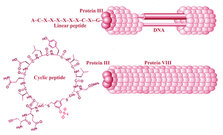
Covalent cyclic peptides represent a transformative approach for targeting challenging protein-protein interactions (PPIs) characterized by flat, extensive binding surfaces. Recent advances in electrophilic phage display now enable the evolution of these peptides through integrating sulfur(VI) fluoride exchange (SuFEx) chemistry with functional selection strategies. This innovative platform combines genetic encoding with site-specific cyclization and warhead incorporation to generate high-affinity, irreversible binders. When targeting the SARS-CoV-2 Spike-ACE2 interface, the approach produced sub-100 nM inhibitors with >10-fold improved potency over non-covalent analogues. The methodology's success against this clinically relevant target underscores its potential to address longstanding challenges in PPI modulation, particularly for high-value targets in oncology and neurodegeneration. By combining covalent engagement with phage display's evolutionary power, this technology establishes a new paradigm for developing mechanistically validated peptide therapeutics against previously intractable interactions.
References
1. Scott DE, Bayly AR, Abell C, Skidmore J. Small molecules, big targets: drug discovery faces the protein–protein interaction challenge. Nat Rev Drug Discov. 2016;15(8):533–550.
2. González-Muñiz R, Bonache M, De Vega M. Modulating protein–protein interactions by cyclic and macrocyclic peptides. Molecules. 2021;26(2):445.
3. Cardote T, Ciulli A. Cyclic and macrocyclic peptides as chemical tools to recognize protein surfaces and probe protein–protein interactions. ChemMedChem. 2016;11(8):787–794.
4. Perea SE, Reyes O, Puchades Y, Mendoza O, Vispo NS, Torrens I, et al. Antitumor effect of a novel proapoptotic peptide that impairs phosphorylation by protein kinase 2. Cancer Res. 2004;64(19):7127–7129.
5. Hampton JT, Liu WR. Expanding the genetic code for covalent peptide evolution. Chem Rev. 2024;124(11):6051–6077.
6. Wang S, Zhang Y, Li J, et al. Covalent peptide inhibitors from electrophilic phage display target Spike–ACE2 interaction. J Am Chem Soc. 2025;147(15):7461–7475.
7. Jin G. Fishing for covalent peptides. Nat Chem Biol. 2025;21(5):456–462.
8. Chen S, Wang XS, Zheng M. Next-generation phage display for covalent inhibitor discovery. Nat Biotechnol. 2021;39(4):490–498.
9. Ekanayake AI, Chen L, Yan K, et al. Covalent peptide ligands from electrophilic phage display libraries. J Am Chem Soc. 2021;143(12):5497–5507.
10. Cheng J, Zhou J, Kong L, et al. Stabilized cyclic peptides as modulators of protein–protein interactions: promising strategies and biological evaluation. RSC Med Chem. 2023;14(12):1204–1221.
11. Qian Z, Dougherty PG, Pei D. Targeting intracellular protein–protein interactions with cell-permeable cyclic peptides. Curr Opin Chem Biol. 2017;38:80–86.
12. Buyanova M, Pei D. Targeting intracellular protein–protein interactions with macrocyclic peptides. Trends Pharmacol Sci. 2021;42(1):17–29.
13. Kosugi T, Ohue M. Design of cyclic peptides targeting protein–protein interactions using AlphaFold. Int J Mol Sci. 2023;24(19):14100.
14. Cao L, Goreshnik I, Coventry B, et al. De novo design of picomolar SARS-CoV-2 miniprotein inhibitors. Science. 2020;370(6515):426–431.
15. McHugh S, Rogers J, Solomon S, et al. Computational methods to design cyclic peptides. Curr Opin Chem Biol. 2016;34:70–77.
16. Hashemi Z, Zarei M, Fath M, et al. In silico approaches for the design and optimization of interfering peptides against protein–protein interactions. Front Mol Biosci. 2021;8:669431.
Published
How to Cite
License

This work is licensed under a Creative Commons Attribution 4.0 International License.
Authors who publish with BioNatura Journal agree to the following terms: Authors retain copyright and grant the BioNatura Institutional Publishing Consortium (BIPC) right of first publication with the work simultaneously licensed under a Creative Commons Attribution 4.0 International License (CC BY 4.0). This allows others to share the work with an acknowledgment of the work's authorship and initial publication in this journal.This is an open access article distributed under the terms of the Creative Commons Attribution 4.0 International License (CC BY 4.0), which permits unrestricted use, distribution, and reproduction in any medium, provided the original work is properly cited.


